Monday, June 7, 2010

The Nilgiris Dioica Tree

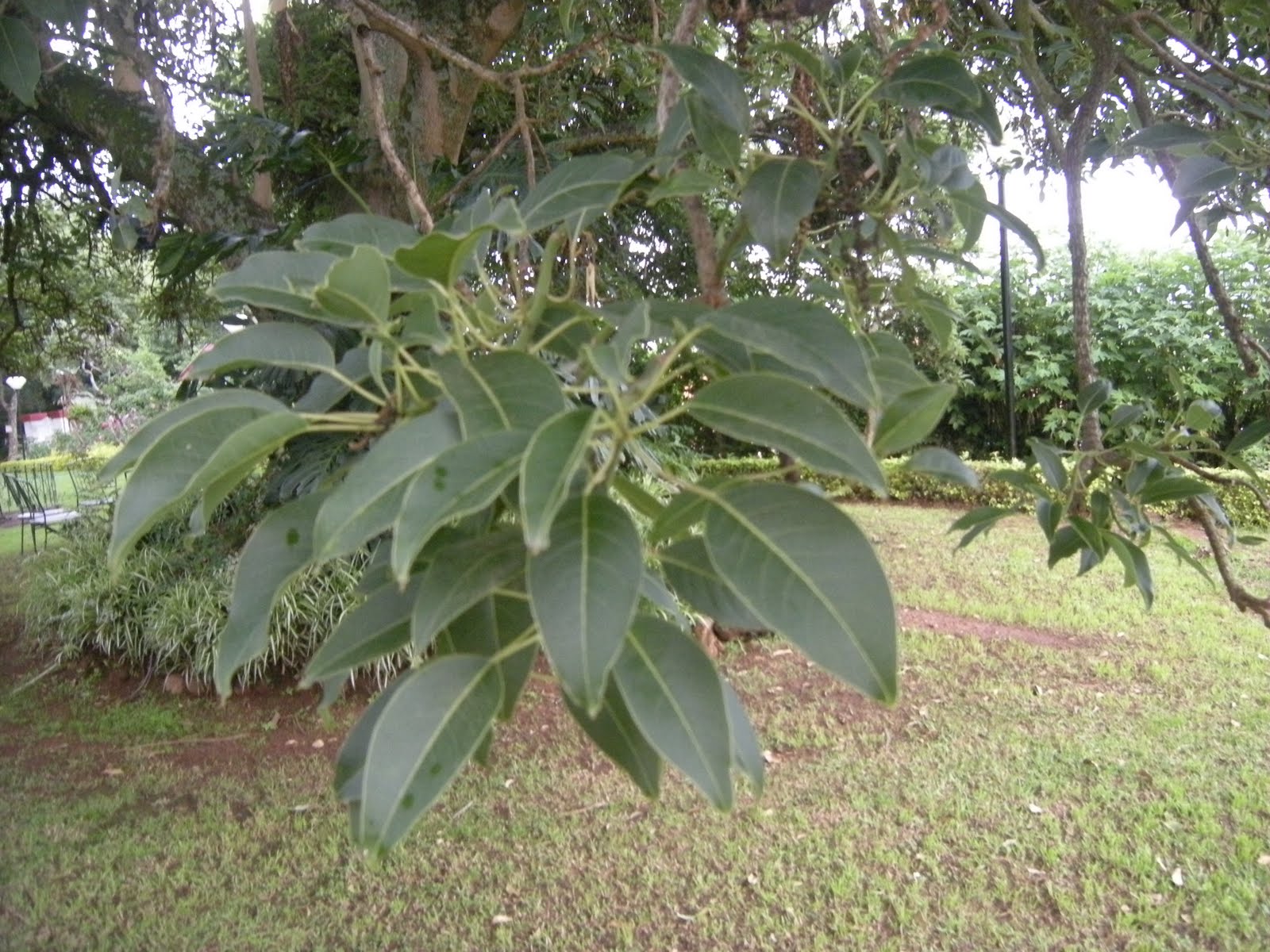
This is the tree I have been doing yoga under, and I am in love with it. The sign on the tree says it is a Nilgiris Dioica Tree. The genus listed took me to the Omnu from South America. This is how Wikipedia explains it.


The ombú is a massive evergreen herb native to the Pampas of South America. The tree has an umbrella-like canopy that spreads to a girth of 12 to 15 meters (40 to 50 feet) and can attain a height of 12 to 18 meters (40 to 60 feet). The ombú grows fast but being herbaceous its wood is soft and spongy enough to be cut with a knife. Because of this, it is also used in the art of bonsai, as it is easily manipulated to create the desired effect. Since the sap is poisonous, the ombú is not grazed by cattle and is immune to locusts and other pests. For similar reasons, the leaves are sometimes used as a laxative or purgant. It is a symbol ofUruguay and Argentina, and of Gaucho culture, as its canopy is quite distinguishable from afar and provides comfort and shelter from sun and rain. The fireproof trunk also stores water for the large fires.The tree is categorized in the same genus as the North American pokeweed. The species is also cultivated in Southern California as a shade tree.

It is my understanding that the Taj Hotel was originally lodging for the monks at the very old All Saints Church next door and that some of these exotic trees were planted then.

These are spider plants someone planted around the base of the tree. Isn't that gorgeous?


See how branches that look like roots grow up out of the bigger branches? It's like an upside down banyan tree.

Sunday, June 6, 2010

Bharathanatyam recital - Malavika Sarukkai


Malavika Sarukkai
Bharatanatyam (Tamil: பரதநாட்டியம்) is a classical Indian dance form originating in Tamil Nadu[1][2][3][4][5], India. One of the oldest of the classical dance forms in India, it is also known as the fifth Veda. Bharatanatyam is usually accompanied by the classical music. It has its inspirations from the sculptures of the ancient temple of Chidambaram. Bharatanatyam, as the name depicts is the combination of:
BHA- Bhava (Expression), RA- Raga (Music) and TA- Tala (Rhythm) Bharatanatyam is a traditional dance-form known for its grace, purity, tenderness, and sculpturesque poses. Today, it is one of the most popular and widely performed dance styles and is practiced by many dancers all over the world.[6][7][8]i


Sunday night, the Bharatiya Vidya Bhavan, Nilgiris Kendra, presented Malavika Sarukkai, one of India's best Bharatanatyam dancers.  I had never seen anyone with Malavika's skill and experience dance before.  She also spoke about what she was going to dance for us, so I had a good idea what I was watching.   She named her performance "Dvipravaha - The Sacred and the Secular."  The music was gorgeous too.  I was in heaven.  I went with my friend Sheila, my landlady, and two of her cousins.  Met Rose from the Earth Trust event yesterday, so we sat together too.  Sigh.

Saturday, June 5, 2010

Honoring Tribal Healers

Earth Trust Nilgiris chose World Environment Day to hold a ceremony honoring tribal healers here in the Nilgiris. Vanya Orr, the Project Director, spoke eloquently about the plight of the world and its degraded environment due to poor human stewardship, and how much the world needs the knowledge of our indigenous healers. The event took place at the Women's Hostel of the YWCA in Ooty.
Malathi (R) gave me a ride and brought her friend Rose (L). Rose is a newly retired English Lit professor who does oral history work in remote tribal areas. She's very knowledgeable about tribal life, and it was really a privilege to get to know her.

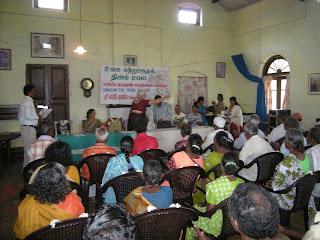
Earth Trust's Sevakumar starts off the event. At the table are Malathi Mittal, a board member, Vanya Orr, and other dignitaries who work with tribal people.

This was the first healer to be honored. Each healer had a chance to speak.
Three Toda women singing for us
One of the women healers getting her trophy
One of the male healers


At the end of the ceremony, the healers were encouraged to bring any treatments they knew of to the panel of botanists, etc., so that trials could be done on their medicines. There was also discussion on how to get access to native plants in the forest from the Forest Dept. employees, etc. Apparently the Forest Dept. is giving away some land to tribal people, and Vanya was encouraging them to take advantage of that and to show how native plants can thrive on these small plots. Needless to say, the discussion is much larger and I didn't get a great deal of it because I only understand English.

It was a very encouraging event and discussion over lunch was stimulating.

Our governments have committed more terrorism on humanity than the Maoists have Arindam Chaudhuri, Editor-in-chief, The Sunday Indian

This was an editorial in The Sunday Indian's 9 May edition.  It's true here in India and is true in Nepal.  It's the kind of truth we don't hear much.  Refreshing, but tragic.


Our governments have committed more terrorism on humanity than the Maoists have 
Arindam Chaudhuri, Editor-in-chief, The Sunday Indian

http://www.thesundayindian.com/09052010/storyd.asp?sid=8857&pageno=1

Wednesday, May 26, 2010

Thursday, May 20, 2010

Matthew Stein: The Perfect Storm, Six Trends Converging on Collapse

One of the organizations I am connected with on Facebook is Eco WALK the talk. Bhavani Prakash posted the following article in The Huffington Post by Matthew Stein. It gives you a better idea of our reality. I couldn't agree more.


Wednesday, May 19, 2010

Starving patient at our clinic

Monday, 17 May, was our last clinic day til it opens again 2 June. One of the patients Monday I remembered from a few weeks ago. I remembered her because, although younger than I, she is ancient, almost unable to walk. When she came in Monday, I asked the doctor to see her on the bench in the waiting room where she was lying. To make a long story short, the diagnosis was malnutrition - "poverty." I was so upset to find that there was no food bank here. No place to go for food. When I told the other women working with me, they surmised, because her brother brings her to the clinic, that she was a widow who had come to stay with her brother, where she is probably expected to do all the work and eat what is left over, if any.

Starvation is a very bad way to die (or live, for that matter).

This is where cultures clash badly for me. I wept and expressed my outrage. We talked about the pitfalls of doing a food bank here. Then, I started the whole conversation again with Gopal when I got home. We have to do something about food for the very poor here. So, we're going to find out if anyone is doing anything we don't know about, and maybe we can help there, or help get the word out, and learn what may be standing in the way of access. Religion and caste could be two reasons why a food bank may not be accessible for some people, for example.